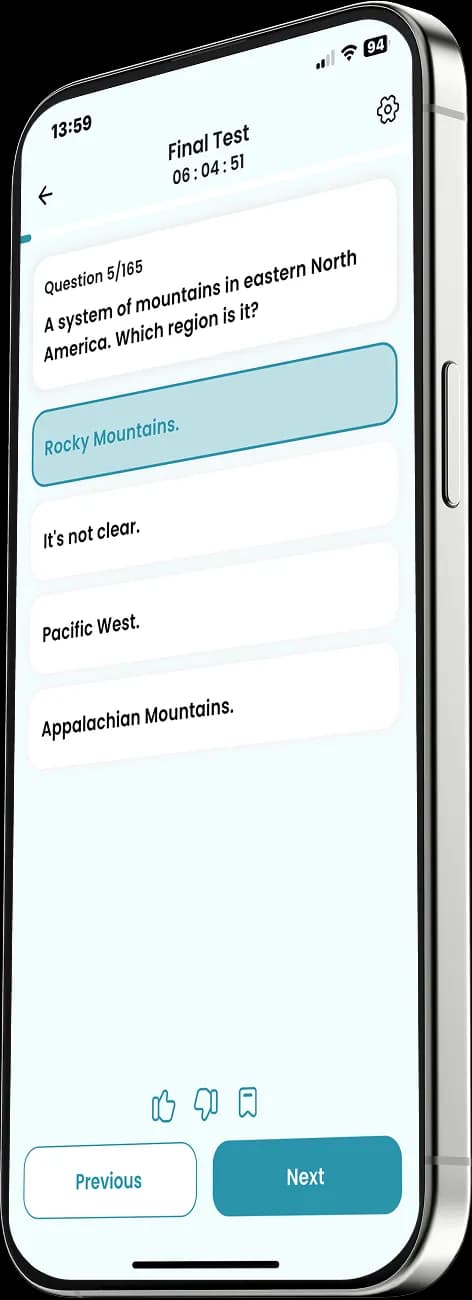
Questions
Questions
to practice anytime, anywhere!


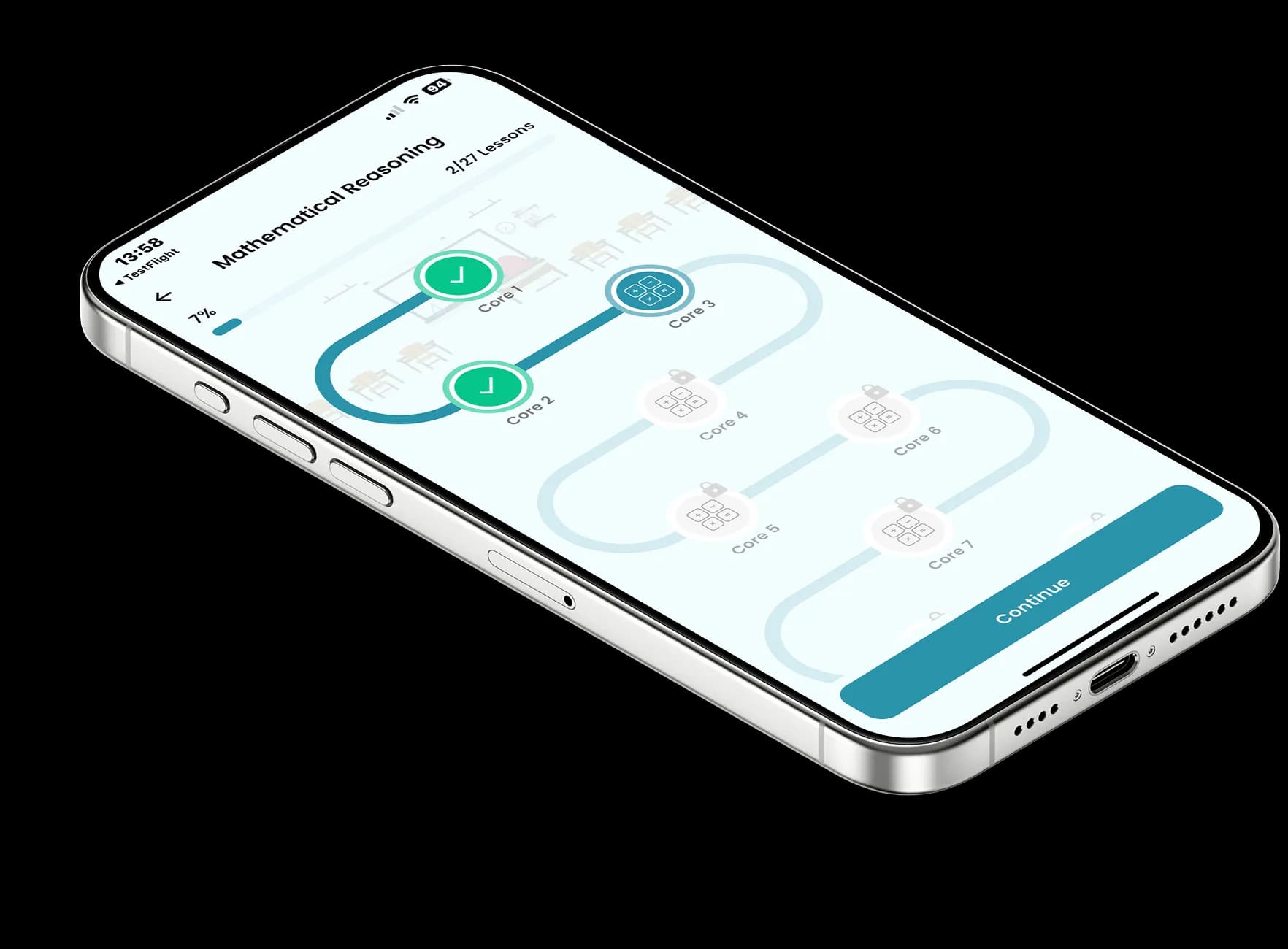
Taking a GED diagnostic test is the single most effective way to kickstart your journey toward earning a high school equivalency diploma. Instead of spending months studying material you already know, an initial assessment pinpoints your exact strengths and knowledge gaps. This targeted approach saves valuable time, boosts study efficiency, and builds genuine confidence before exam day. Here is everything you need to know to get started today.
A GED diagnostic test evaluates your knowledge and reasoning skills across the four subjects included in the GED exam. It uses a selection of questions from each subject to highlight your strengths, reveal knowledge gaps, and recommend areas for further study.
Unlike a regular practice session, the main purpose of a diagnostic test is not simply to earn a high score. It is designed to show what you already understand and where you should focus next.
The Mathematical Reasoning section measures your ability to solve quantitative and algebraic problems. Questions may cover:
Whole numbers, fractions, decimals, and percentages
Ratios, proportions, and unit rates
Perimeter, area, surface area, and volume
Tables, graphs, statistics, and probability
Algebraic expressions, equations, and inequalities
Functions, slopes, and coordinate graphs
Multi-step math word problems
Your results may show whether you need to strengthen basic calculations, review algebra, or improve your ability to translate written information into mathematical equations.
The Language Arts section evaluates your reading, writing, grammar, and argument-analysis skills. It may include:
Identifying central ideas and supporting details
Making inferences from literary and informational passages
Determining an author’s purpose, tone, or viewpoint
Comparing claims and evidence from different texts
Correcting grammar, punctuation, and sentence errors
Improving paragraph organization and transitions
Evaluating the strength of written arguments
This part of the assessment can reveal whether you should focus on reading comprehension, language conventions, text organization, or evidence-based writing.
The Science section measures how effectively you can understand scientific information and use evidence to reach conclusions. Questions may involve:
Life science, including genetics, cells, and ecosystems
Physical science, including matter, energy, force, and motion
Earth and space science, including climate and natural systems
Hypotheses and experimental procedures
Independent and dependent variables
Control groups and experimental conditions
Scientific graphs, tables, diagrams, and formulas
Conclusions supported by experimental evidence
Your performance can help determine whether you need more science content review or additional practice interpreting experiments and data.
The Social Studies section assesses your ability to analyze information related to government, history, economics, and geography. It may cover:
The U.S. Constitution and the branches of government
Individual rights and civic responsibilities
Major events and developments in U.S. history
Supply and demand, taxes, and government spending
Geography, migration, and population patterns
Historical documents, maps, and timelines
Charts, political cartoons, and economic data
Cause-and-effect relationships and competing viewpoints
The results may show whether your main challenge is understanding social studies concepts or using evidence from sources to answer questions.
Once you complete your assessment, you receive a detailed score breakdown. This personalized blueprint highlights specific skills needing attention, so you do not waste time reviewing material you have already mastered. Once you have addressed your weak areas, taking a full-length GED practice test is the ideal next step to measure your progress under realistic test-day conditions.
Starting your prep with a GED diagnostic test gives you the clarity, focus, and direction needed to succeed. By revealing your core strengths and identifying critical areas for improvement, this evaluation eliminates guessing and streamlines your study schedule. Take your initial assessment today to build a custom study plan, gain test-day confidence, and earn your diploma faster than you thought possible.