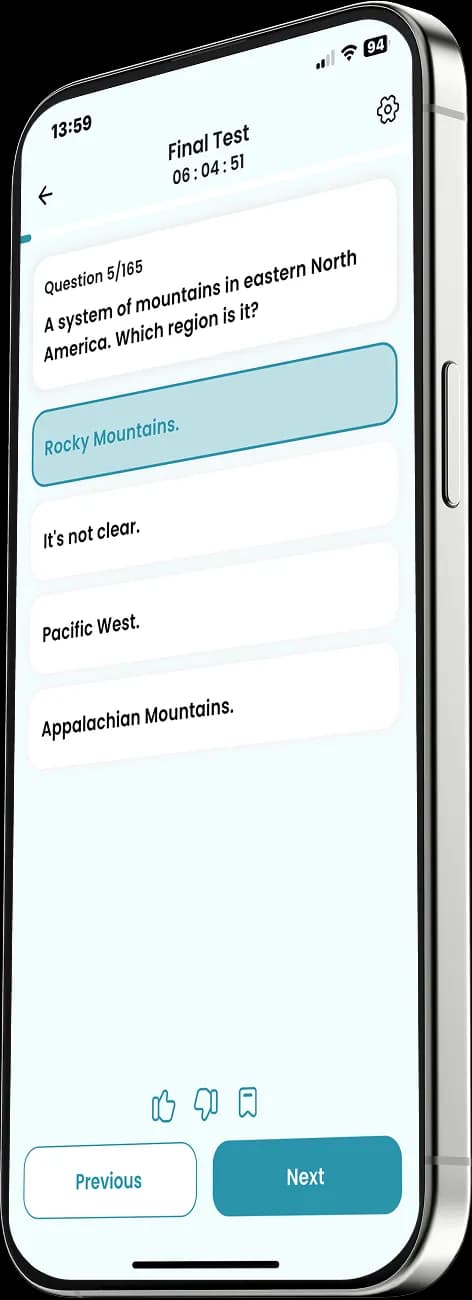
Questions
Questions
to practice anytime, anywhere!


A full-length GED Language Arts practice test gives you a realistic way to prepare for the timing, question variety, and reading demands of the official exam. By completing an entire test in one sitting, you can evaluate your comprehension, grammar, argument analysis, and writing skills under test-like conditions. This guide explains the topics included and how each section supports more focused preparation.
A full-length practice test reflects the range of skills assessed on the GED Reasoning Through Language Arts exam. It includes questions based on literary and informational texts, language conventions, argument analysis, and written communication. Completing all sections also helps you practice maintaining focus and managing your time across a longer testing session.
Reading comprehension questions measure how well you understand and analyze written passages. You may read fiction, workplace documents, historical texts, articles, or other nonfiction sources.
Questions may ask you to identify the central idea, recognize supporting details, determine an author’s purpose, or explain how a passage is organized. You may also need to make an inference or determine the meaning of a word using context clues.
A full-length test exposes you to several passage types, allowing you to practice adjusting your reading strategy based on the material.
The GED Language Arts exam includes questions that ask you to evaluate claims and supporting evidence. You may need to identify an author’s main argument, determine whether evidence is relevant, or compare the viewpoints presented in two passages.
These questions test your ability to distinguish facts from opinions and recognize whether a conclusion is logically supported. When reviewing your answers, look closely at why one piece of evidence is stronger than another.
Grammar questions focus on making writing clear, correct, and easy to understand. Common skills include correcting sentence fragments, run-on sentences, punctuation errors, verb agreement, pronoun use, and incorrect word choices.
You may also be asked to select the best revision of a sentence or paragraph. Practicing these questions can help you recognize common errors more quickly and understand how grammar affects the meaning of a passage.
Some questions ask you to improve the structure and flow of written text. You may need to choose an effective transition, move a sentence to a better location, remove irrelevant information, or select a stronger introduction or conclusion.
These tasks measure your ability to organize ideas logically and maintain a clear focus. They also help you develop useful skills for planning and revising your own writing.
A realistic full-length test may also help you prepare for the extended response task. This activity requires you to read source texts, evaluate the arguments, and write a response supported by evidence.
Practice organizing your answer with a clear position, relevant examples, and logical explanations. For additional preparation in Math, Science, and Social Studies, use our GED practice test to review all four GED subjects.
Completing a full-length GED Language Arts practice test is more than a way to check your score. It is an opportunity to improve your pacing, strengthen your reading and writing skills, and discover exactly what to review next. Recreate test-day conditions, examine every incorrect answer, and repeat the process regularly. Each completed test can move you closer to feeling prepared, focused, and confident on exam day.